Wednesday, July 20, 2011

A visit from Our Book Worm Club Dadi; Shamsa Kazmi

We need trees and as city dwellers we often consider them simply a part of the landscape decorating the streets and people's homes. Sabheen Aunty read us a story about a girl who valued them as friends. The story about Meera is based on a true incident, about an unschooled girl who loved to learn from her surroundings in a village in India. Amongst her favourite haunts was a copse of trees which she aptly named Nani, Bahlu and Chotu.One day a group of city people arrive with machinery to cut away the trees, they only valued them as expensive building material. Meera rushed to intervene and seeing her determination and passion for the trees she loved, the village adults are compelled to act too, as do the city people. The story ended by giving all the club members a renewed appreciation for trees and throughout the reading the children discussed the different aspects of these creations of Allah SWT that make them so important to our lives.
 

TAC made by Shamsa Aunty
People and plants coexist; as plants cleanse the air for us and trees grip the soil keeping necessary soil firm for our use, we have a responsibility to care for them too. This was one of the things learnt from the activity conducted by Aunty Shamsa Kazmi ( the Bint Absar's Dadimaa, Masha'Allah). Shamsa Aunty demonstrated how to build an TerraAqua Column (TAC) and then guide the group as the children and mothers worked together in groups to put it together.


Handout of instructions to make TAC
 Shamsa Aunty distributed hand outs with instructions to guide the work. First she cut a bottle so that its upper half with its neck could be inverted to sit inside the lower tube. The base of the bottle was then cut and to make it a tube. the base of another bottle was cut and the first bottle tube with the inverted bottle neck were inserted into it to make a  column.


Moong Beans germinated overnight in a damp towel by Shamsa Aunty

The lower chamber of the column was filled with water, the inverted bottle neck would hold the soil, plants and germinated seeds, also provided by the Kazmi family, Masha'Allah. Shamsa aunty made a hole in the bottle cap with a heated knife and then inserted a wet drawstring through it. This drawstring acts like a wick, it runs through the entire column; absorbing the water from the bottom chamber and as it passes through the soil the roots of the plant and the soil absorb the water.


soil and saplings courtesy the Kazmi Family

The activity was very interactive as Shamsa Aunty discussed each step with the group, the main variables involved in the column (water, soil and plants) and suggested how they can be changed to observe  and measure the effects of the changes; using salt water, different types of soil sand various plants.


TAC prepared by children

TAC with drawstring leading into the water chamber
Masha'Allah the Book Club members enjoyed the hands on activity and wished that Shamsa Aunty could visit us again and teach us more. She will be returning to her home outside the country soon, but as she is now our Honorary Book Worm Club Dadi, we look forward to her next visit Insha'Allah.

Wednesday, July 13, 2011

Mirchi Barai Samosas (Spicy Samosas)

Today's session was a real "treat". To begin with, the book (Mirchi Barai Samosai) was a story about two boys who help their mother prepare samosas for tea. Things seem to go fine until the boys accidentally spill too much chillies powder into the mixture (while their mother was attending to a phone call). The boys keep quiet about their mistake and anxiously await the results of the affair when guests arrive for tea.

The book gave the mothers an opportunity to discuss how we should entertain guests; as Muslims our guests have rights on us. Lubna Aunty and Ummibaps demonstrated how not to treat a guest. A story from the lives of the Sahabah was also recalled; where a Sahabah (Abu Talha RA) brought one of the Prophet SAW guest home. Unfortunately he did not have much food in the house to serve him and so he and his wife put the children to sleep and under the pretence of adjusting the lantern turned off the light. They then served the meal in complete darkness and pretended to eat, allowing their guest to eat his fill. The next day our Prophet SAW greeted the Sahabah with the good news of Allah SWT pleasure of his treatment of the guest. Alhumdulillah.

Mashing and Mixing
Following the discussion the Book Worm Club members headed to the kitchen to prepare their treat; home made samosas. The children mashed potatoes with forks and their hands adding salt and zeera (cumin) powder and a dash of coarsely ground red chillies, while the mothers supervised and aided as necessary. Some kalonji was added to the potato mixture too.

Preparing dough for samosa pastry


 The eldest two girls Emaan bint Absar and Eman Bint Awais prepared the pastry kneading flour, oil, salt and water together.

preparing dough balls
rolling out dough balls
Once the flour was ready, Lubna Aunty demonstrated how to make little balls of dough and roll it out into a circle, then filling it with the potato mixture and sealing the flour with a little water into small semi circles. Masha'Allah each child made a ball and took turns to use the single rolling pin and board. as the boys worked with the board first, the girls, under Sabheen Aunty's guidance, began rolling out their samosas in a plate using half a marble 'dasta'.
potato filling ready


good old fashioned ingenuity; making do with what you have
adding filling
Ready to Fry


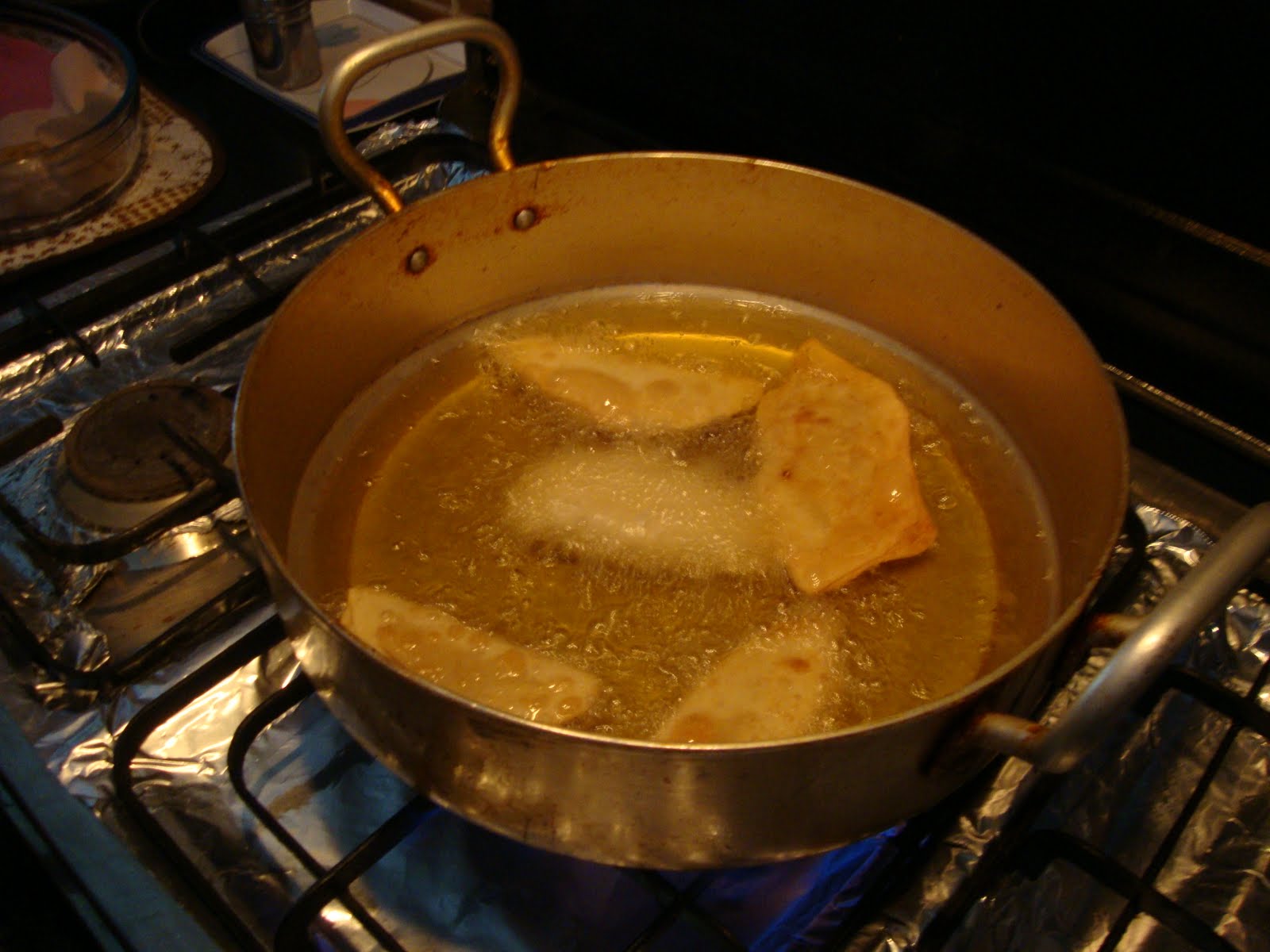
samosas being fried
As the samosas were prepared Sakina Aunty fried them and the hot samosas were served alongside the other snacks. Masha'Allah the mothers were impressed by the childrens' patience and ability as most of them managed to roll out neat circles of the dough. Everyone enjoyed the tasty samosas and we mothers had the additional pleasure today of  "having our children feed us", Masha'Allah.


Ready to Eat!

Wednesday, July 6, 2011

Precious Water


We began this session of our Book Worm Club with "Show and Tell", where our member Saaim Saadi shared his project of dinosaurs. He had made a 3D display of dinosaurs in the wild (all by himself Masha'Allah!), as his tyrannosaurus Rex stood menacing to one side and the Dinonychus who moved in herds stood close by. His replica of a Ankylosaurus, with it scaly back and block end tail was the most fascinating model, Saaim explained how it used its tail to hit meat eating dinosaurs who tried to hurt it.The children and mothers alike were impressed as he recounted their names, their eating preferences and then answered questions.


For more information on these ancient creatures do get in touch with Saaim.


Mysterious Costume


Next Umm BAPs appeared dressed in blue. The children tried to guess what she was trying to depict (someone thought she looked like a penguin) but they couldn't figure it out, so she decided to read a book to help them guess.


The book "The Water Hole" displayed the various animals that visit a waterhole and their reactions to what was happening to the water, as it slowly disappeared......the pictures helped the children guess that Umm BAPs was pretending to be a drop of water.


Following the story the book club members were reminded of how living things drink water. Imaan pointed out how our bodies consist of 72 per cent water and Lubna Aunty explained how cucumbers have 99 percent water. Aisha Aunty told us that watermelon has 97 percent water content and Alhumdulillah we all agreed that it is one of Allah SWT blessings to us that the most fleshiest and juiciest fruit are in season during the summer months, when we need to increase our water consumption.

We agreed that water is truly precious and we ought to show Allah SWT our gratitude for it. Umm BAPs then read us another book. "Precious Water; A Book of Thanks" reminded us how all living things need water to survive.

Following the story, Umm BAPs spoke of Allah's warning in Surah Mulk, that if all the water in the land were to sink away who could then retrieve it? Though water is replenished through the water cycle, each drop of water and even the water cycle itself, has been provided to us by Allah SWT alone.


With that in mind we discussed the various habits we could adopt to conserve water Insha'Allah. The children offered many suggestions and even the mothers shared their tried and tested practices.


Finally, before the snack, each family received a drop shaped paper, to take home, to develop their own personal pledge and course of action to conserve water, Insha'Allah.

Wednesday, June 22, 2011

Being Thankful For What We Have


This week the Book Worm Book Club members were treated to a double feature: a book and a video.

The book was a story about a bird who had a single tail feather and was jealous of another bird who had two. Her jealously drove her to take drastic measures so she eventually attained several beautiful tail feathers, just as she wished, only to then realize the foolishness of her wish. The story indicates how we should be thankful for what Allah SWT has given us and that He has created us in a manner that is best for us.


The children were then taught a dua asking Allah SWT to help us make dzikr to Him, be thankful to Him and beautify our worship to Him.

Next the children were shown some videos about a man, Nick Vujicic who has no hands or feet but is living life as normally as he can. The children were amazed to see him swim, cook and even kick a ball. Umm Emaan then led a discussion regarding how Allah SWT shows mercy and helps all His creations even if they do not heed Him.

You can see these videos here :
http://www.youtube.com/watch?v=o2xMrra6mZA&feature=related
http://www.youtube.com/watch?v=u3LFBqvvW-M

Lastly, the children were asked to do some research regarding the Sahaba of the Prophet Muhammed SAW, who was handicapped but did not allow it to become an obstacle in his efforts to gain Allah's Pleasure. He was referred to in the Quraan and he would not complain about his handicap but used it to his advantage Masha'Allah. More about this Sahaba next week insha'Allah.

Wednesday, June 15, 2011

Shakoo Kay Joothay (Shakoo's shoes)


Last week the Book Club members listened to an amusing story in Urdu (which was translated as it was being read). The story revolved around a rich but miserly man who refused to spend a single dinar to replace his old and worn out shoes, little realizing that the would eventually cost him his entire fortune. Everyone participated by trying to guess the fate of the ominous shoes as well as explain the meaning of some of the more tricky Urdu words. The children were later asked about what they learned from the story, answers varied from how money should be spent to not to throw things into lakes.


Armed with empty cereal boxes, scissors and a stapler, the mothers and children made paper slippers under Umm Uzair's direction. The kids enjoyed parading around the house with them on and even baby Warda had a pair for herself.

This book has been published by Ferozsons and is a fun read for children of all ages.

Wednesday, February 9, 2011

A Whale of a Time in Maritime Adventures

By Sabin Mustafa

There’s something special about being told a story without being read to from a book. Maybe it’s the accompanying actions and expressions. Perhaps it just takes us back to a time, when there weren’t books and pictures to nudge us on, but just our imagination to take us for an incredible journey. The Maritime Museum in Karachi was a marvellous setting for the story of Hazrat Younus (AS). The Quran also refers to him as Zunnoon, and his plight has been narrated in Allah’s (swt) words. Our families all excitedly gathered at the venue, full of anticipation in this variation of our weekly session of Bookworm’s book club. Though the club meetings are usually held at Laila Khala’s cosy and welcoming home, we occasionally allow her a break, take our little troupe to other locations, and carry on the entertainment.

As she told the thrilling story of Hazrat Younus (AS), Atefa Khala’s billowing Abaya was ideal in enhancing the demonstration of thunderstorm, strong gales, and darkness. Many kids knew the story and were quick to chip in with their contributions. Atefa Khala explained how Hazrat Younus (AS) had run from his Master, the terrors he went through, and what the experience inside the whale’s stomach might have been like. She went on with how prophet Younus (AS) prayed to Allah (swt), how Allah helped him out of his predicament and bestowed His favours upon him, when he reached the shores.

Our mental image of the whale’s dimensions, the fascinating creature that played an important role in the story, was elucidated when the group marched to the indoors section of the museum. We saw the real skeleton of a baby whale, which had been beached on the shores of Karachi many years ago. The suspended skeleton was huge! It was fascinating to inspect the bones and compare them with dinosaurs’ skeletons, which appear similar in size.

After story time, we spread out all the scrumptious snacks we had for our picnic: biscuits, pasta, noodles, sandwiches, Samosas, salad, and drinks. We enjoyed the feast on three mats: one for girls, one for boys and one for ladies. We chattered and babbled, and gobbled the food in the shade of a large tree. The moist grass didn’t dampen our spirits, and the kids thoroughly enjoyed running around in the vast lawn, with the elder ones fetching the little ones back every now and then! The kids messed their clothes climbing on the small freshly painted vessel. We observed squirrels scurrying about and a beehive, which was built on a small tree about six feet high, was very close and extremely tempting to poke and prod, though, Alhamdulillah, none of the children did!

The Maritime museum is spread over 28 acres comprising picturesque landscape and a magnificent building with a grand flight of steps. Spring flowers welcomed us everywhere. The museum building consists of six galleries: Maritime History Gallery, Pakistan Navy Gallery, Ports and Harbours Gallery, Marine Life Gallery, Photographic Gallery, and the Chief’s Gallery.
Various naval artefacts have been preserved or replicas recreated. The displays include an enlightening map showing the history of the conquest of the subcontinent by the Muslim teenage leader Muhammad bin Qasim. The children were given a synopsis of his great character and feats. There are depictions of different battles, and the defence and warfare schemes employed. Equipment used is displayed and technological development through the years is explained. Children loved the large marine gallery, where they saw, how life exists underwater: different types of corals, sea creatures, such as starfish, barnacles, crabs, shells, sharks and other fish swimming in the sea (well more like hovering in the air...) are inside the ocean minus the water! In another section, there are large aquariums full of large and small fish, real fish, which are always so relaxing to watch. There are paintings of many of the masters, but a large painting illustrating the transformation of the Pakistan coastline over the years was a homeschooling mother’s favourite.

Outdoors, the prominent landmarks include a lighthouse (close to which we had our picnic), a minesweeper, a submarine, a naval ship and a marine fighter plane. Our naval heritage has been beautifully preserved and our families split up to view and enjoy the museum. There is a vast artificial lake with goldfish and carp, ducks and geese. Some of us took a guided tour of the submarine anchored in the lake, where we could look through the periscope, examine living quarters, the radio and sonar equipment, and also watch a video about the Daphne submarine and how it was used to destroy an Indian ship during war. It was a captivating narrative, made more interesting, as we tried to decipher the intermingling naval jargon and that too in Urdu!

Some of us visited the naval plane, where a guide presented another video, let the children inspect the cockpit, and pointed out interesting items like the rigid little seat in the nose of the plane, which was used for a 360 degree view during flight, and levers used to fire missiles! The kind gentleman showed us how the original entrance was really at the back where the equipment and naval soldiers climbed aboard. The door we used had been cut out for the museum visitors. We also viewed other weaponry, vessels, monuments and equipment on display scattered all over the grounds.

The spring cheeriness was manifest in the wonderful blossoms and plants flourishing throughout the gardens - quite a flower show! The families examined them, took pictures and discussed their common names and genus. Alhamdulillah, we didn’t pick the flowers or spoil the foliage in any way. The wonderful manners, sharing, caring, kindness and cooperation that blossoms in our group made the field trip even more enjoyable. May Allah (swt) strengthen our bonds and put Barakah in our group, our Jama’ah.

Perhaps only in homeschooling can we have a book club session without a book in sight! It is the essence of knowledge imparted beautifully in a variety of approaches that makes each step in our learning adventure so memorable. The Maritime Museum is a wonderful place to visit; even better, when you are there with fantastic friends on an exploring expedition!

Wednesday, February 2, 2011

Book club at the Piranis' home

By Atefa Jamal

This week the Bookworm Club gathered at the Piranis’ home, Alhumudlillah. The club members all sat in a circle in the balcony so they could enjoy the wind and sunlight outdoors. Isa read the book “Pizza In His Pocket" to his friends, which was a story about a little boy who loved to eat food from different places around the world, but never thanked Allah (SWT) for the food. Then, one day he met a girl, who hadn’t eaten anything in a long time and was holding her tummy in pain. The boy felt ashamed about his own greediness and bought some food for the girl and her family and they all thanked Allah (SWT) for it. The book advises us to eat all the food our parents give us, including vegetables, without a fuss and share our food too and reminds us that “being thankful is what’s really great, eat the veggies on your plate and don’t be like the boy, who ate and ate and ATE!”

After the story, the club members had a short discussion on eating etiquettes in Islam: to start with Bismillah, use your right hand when eating and which Dua to say once done.

Then we moved on to the activity. The members divided themselves into three groups, each group was given an Atlas and a mother sat with them to help them use it. A large Globe Trotter Twister mat was laid out. Ummibaps called out the name of the countries and cities the boy in the book visited, and the groups raced each other to locate it in their atlas. The group who found the country/city would then send one of their members to stick the place’s name card in the correct place on the Globe Trotters mat.

Once all the places were located, the second part of the activity began. The Ummibaps and Qasim then called out the names of the different dishes the boy in the book had enjoyed. The members had to remember which country/city the boy had received the meal from and then take turns to stick the picture of the meal onto the correct place’s namecard.

Alhumdulillah, it was fun, and we discovered places we had never heard of on the map and we also realized that not all atlas have the same cities marked on their “political world map” pages Subhan’Allah!